About Robin

Occasional painter. Golfer. Fascinated by humanity. Passionate about beautiful stuff, the people who create it and its narrative.

“Gluttony” by Cathal O’Searcaigh

It is the heat-wave of 2013: idyllic, deepest Switzerland. After the formalities, the chilled champagne is dangerously refreshing. The Irish poet, Cathal O’Searcaigh, gets to his feet to read some of his own work that, unusually, has been translated into English. A polite silence settles over the other wedding guests. They sense something unusual is coming.
Gluttony

Gluttony (Craos) by Cathal O’Searcaigh (Translated by Denise Blake & Cathal O’Searcaigh)

I would drink the milk that spills
from the bright jugs of your laughter.
I would eat the speckled trout that swims
in the full pools of your pupils.

From the silken flour of your skin
I would bake a white batch loaf.
From the ripened fruit of your haunch
I would create a summer sweet.

I would feast in your bones, my love.
I would sate my hunger on the honeycomb
of your thighs; your chest’s sugared flesh,
your throat’s luscious apple.

Beware! The delicacies of your body
make me so ravenous.
Each bite of calf, each slice of sinew,
each mouthful of cheek, every tasty nibble

of loin, of shoulder, of plump limb.
I’d swallow you whole, I’d eat you alive.
I’d make you my dawn banquet, my dusk feast.
You’re the sweetmeat of my hunger. I drool for you.

The happy couple applauds with enthusiasm. Singles laugh but shift a little nervously in their seats. Do I see tears in the eyes of some older couples? Like a firework, this perfect and dazzling wedding moment fades abruptly. A perplexed Swiss friend asks me what “drool” means.
Perplexed in Place de Neuve: Thomas Schütte’s “Vier Grosse Geister”

Schutte 1

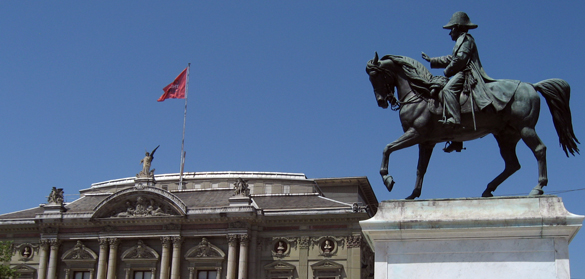
Geneva’s Place de Neuve is dominated by a majestic bronze of General Guillaume-Henri Dufour (1787-1875.) He raises a hand seemingly in a salute to the opera house. At the base of the sculpture is “A. Lanz.” Web-research reveals nothing about this master sculptor whose skills were employed by public subscription in 1884. General Dufour was a founding member of the International Committee of the Red Cross and he presided over the First Geneva Convention in 1864.  What a guy! And here’s a monument to him in the true spirit of Geneva in the very heart of Geneva!

Schutte 2

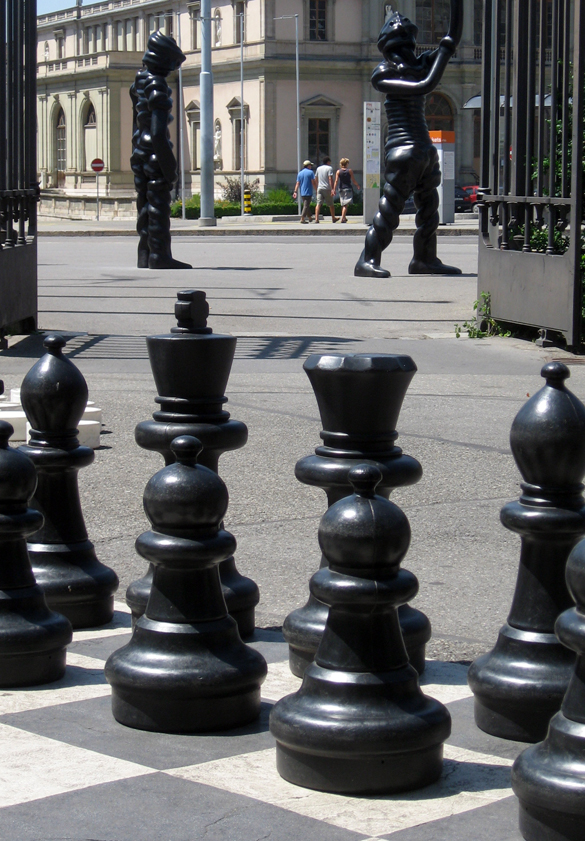
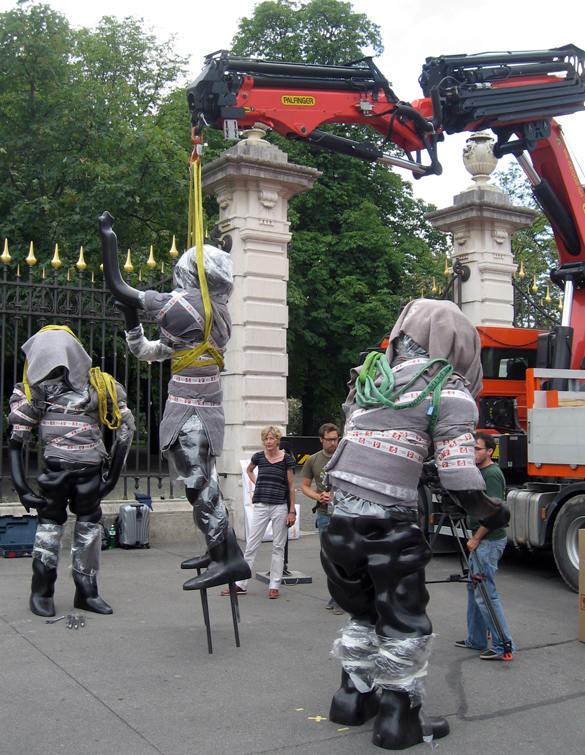
Fifty meters away are the gates of Parc des Bastions: home to the International Monument to the Reformation. A crane-lorry is unloading four large bronze figures. I am intrigued. I have an impression of extra-terrestrials coming to Earth with a little help from humanity. Are these other-worlders going to usurp Calvin, Knox, Beza and Farel? I give the lady in charge of the installation my Talking Beautiful Stuff card asking if a blog-post might be in order when her task is complete. She never calls. She never writes. After some days, I return to Place de Neuve. I decide to write the post anyway. But I need help here. Is this beautiful stuff?

Schutte 3

People play big-public-chess at the entry to the park. My first impression of the four figures now installed there is resonance with the oversized, black chess pieces. My second impression is of liquorice humanoids!

Schutte 4

Schutte 5

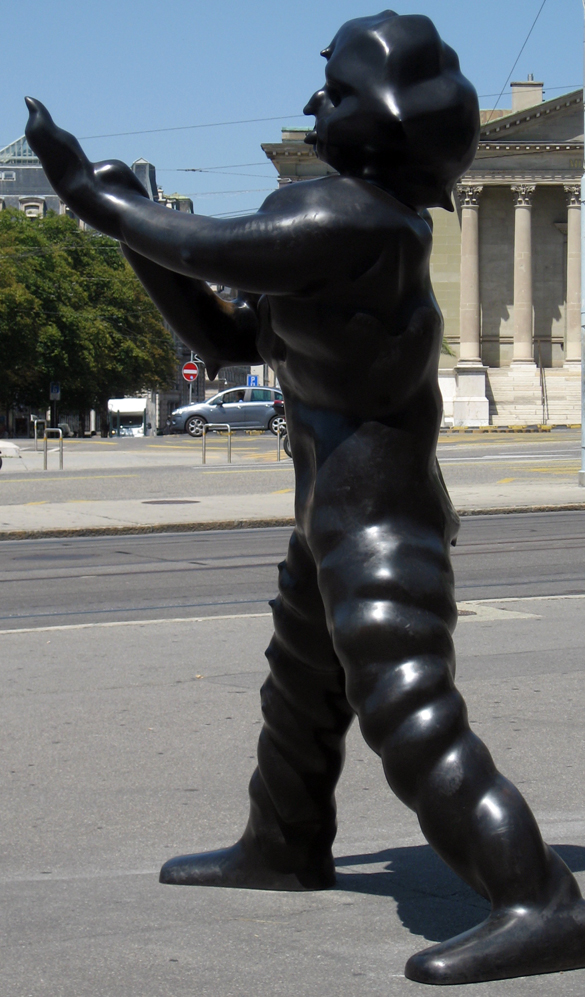
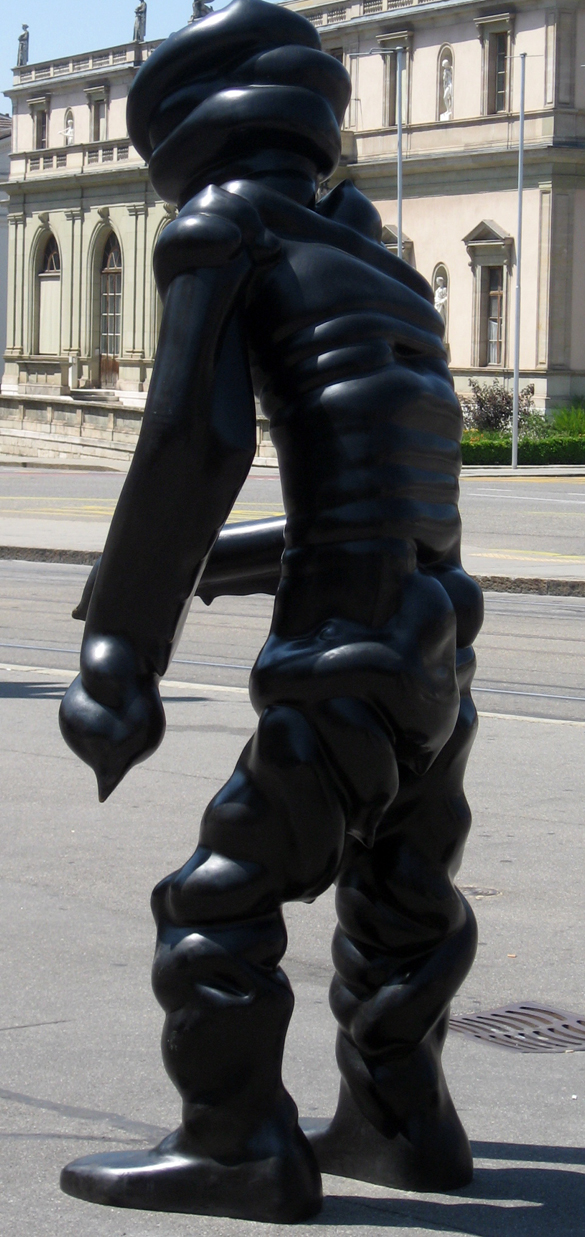
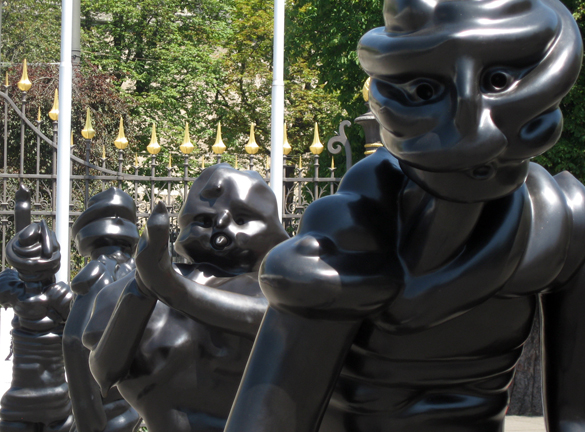
Thomas Schütte’s 2003 Vier Grosse Geister (Four Big Spirits) is on loan to Geneva from the Bayeler Foundation. I admire Schütte’s imagination and workmanship. These rubber-looking, pointy, disconcerting, biped bronzes are powerful and intriguing. They are weighty. They are pleasant to feel and resonate gratifyingly when I tap them with my knuckles. I can’t help being drawn to them. However, despite their feet being solidly planted, their poses have no obvious meaning. Should they be in a group rather than a diverging line? Finally, they are grotesque. Schütte cannot have intended them otherwise.

Schutte 6

I am perplexed. It is surprising to find this work here. It draws instant attention but at the same time generates discomfort and even revulsion. A passing woman sees me taking these photos. She yells “What is this s..t?”

Schutte 7

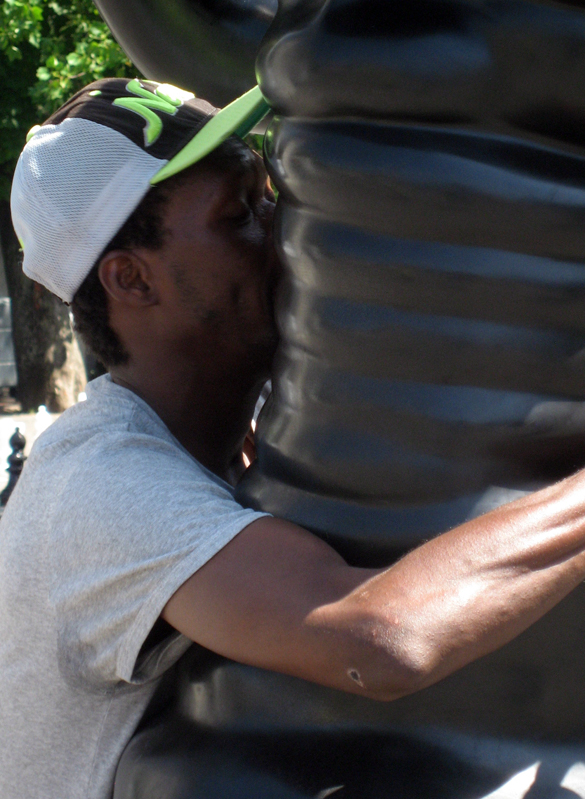
In a cloud of marijuana smoke, a very relaxed man embraces one of the pieces. “I really love this guy!” he says. Well, at least somebody does! I can’t help suspecting that if General Dufour was not set on a four metre high marble plinth, he too would get a hug. And what would the good General – or Mr A. Lanz – have thought of these aliens on their patch? And what do you think?

MB&F M.A.D. Gallery: watches and mechanical beauty

I have a rendez-vous at the MB&F M.A.D. Gallery in Geneva’s old town. It is easier to get there by bicycle than by any other means. It is another sweltering day. My shirt sticks to my back as I push open the plush doors. It is cool inside. Very cool!

MAD 1

The cool interior!

Eléonor is responsible for the gallery’s public relations. She fits the bill. She welcomes me. I ask her about the history of this super-chic Aladdin’s cave. She opens by asking me if I am familiar with Geneva’s watch-making community. I am not expecting this. Images of glossy adverts at the airport flash through my mind. I pull at my left sleeve to hide what I wear on my wrist. Before I can muster any kind of answer, she begins the story of a think-outside-the-box watch-maker with a passion for mechanical beauty.

MAD 2

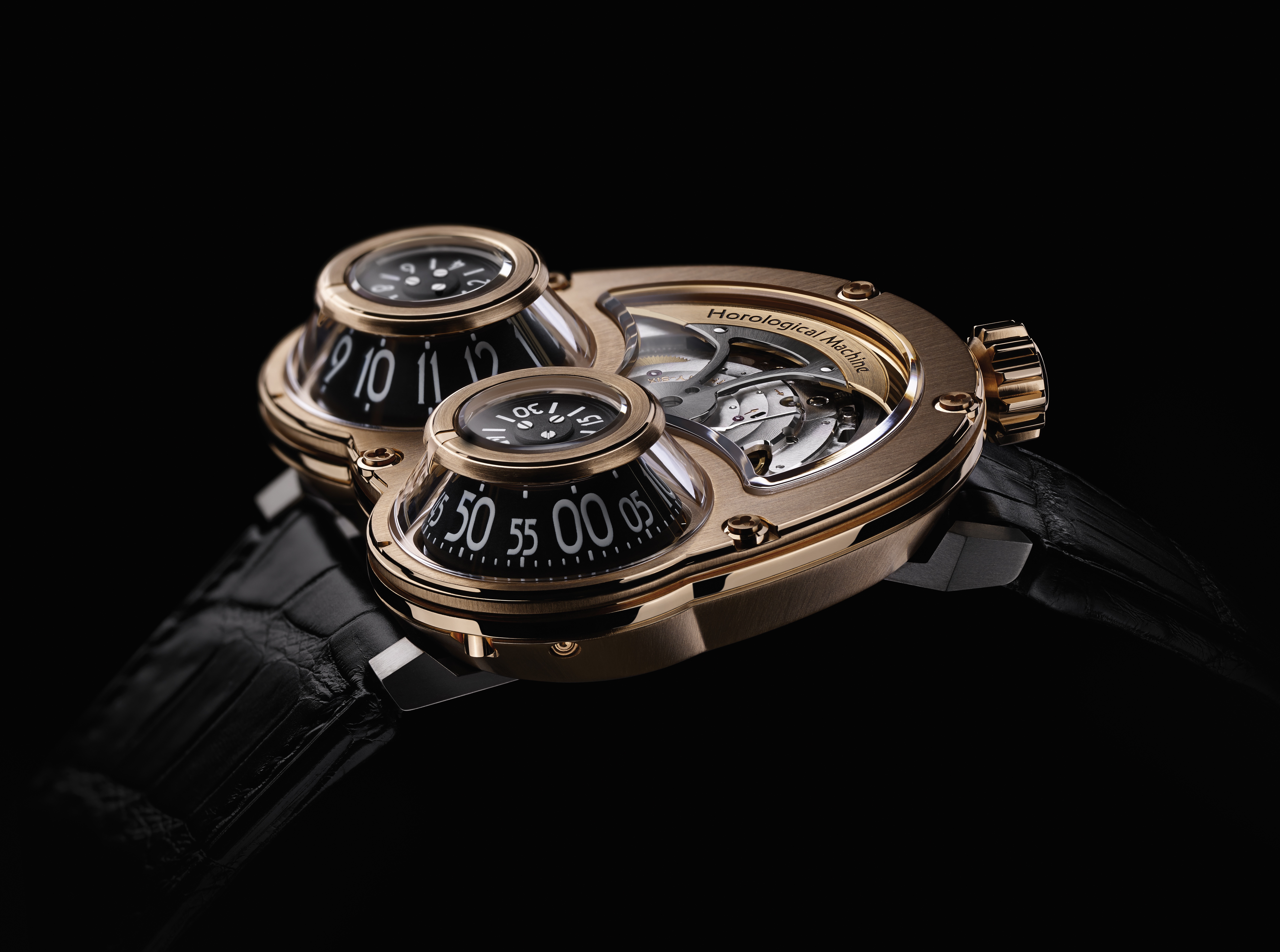
Horological Machine Number 3 Megawind.

MAD 3

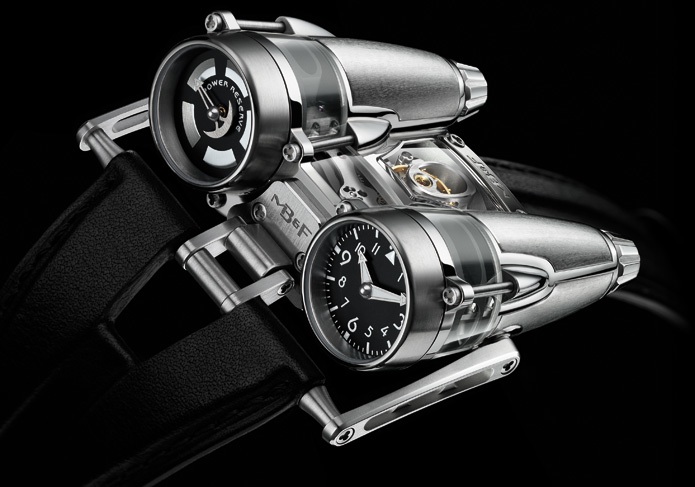
Horological Machine Number 4.

As a child, Maximillian Büsser dreamt of fantastic mechanical things. Leaving the University of Lausanne in 1991 with a Masters Degree in Micro-Technology Engineering he found employment with Jaeger-LeCoultre. In 1998, he became Managing Director of – and transformed – Harry Winston Rare Timepieces. He set up his own company in 2005 to give full vent to his own creative energies. Even though he runs against the grain of conventional watch design, his imaginative approach has won him the Grand Prix d’Horlogerie de Genève.

The MB&F M.A.D. Gallery opened in 2011. It is the showcase for Maximillian Büsser’s “horological machines” and a tribute to Friends (MB&F!) who have helped him along his stellar career path. At the same time, it is a shrine to “Mechanical Art Devices” designed and made by kindred spirits all over the world.

To visit the MB&F M.A.D. Gallery is to be captivated by so much mechanical beauty. But my visit makes for a contrast of feelings. I am drawn to these objects. I want to wear one of these watches for a day. I want to handle the chrome, glass, levers, wheels, cables, nuts and bolts of the other devices. If they have switches, I want to switch them on. I would love just to sit on Chicara Nagata’s motorcycle. At the same time, the aesthetic appeal is so strong that I refrain from touching them; they are too precious. So, I simply stand and enjoy looking at them. Join me!

MAD 4

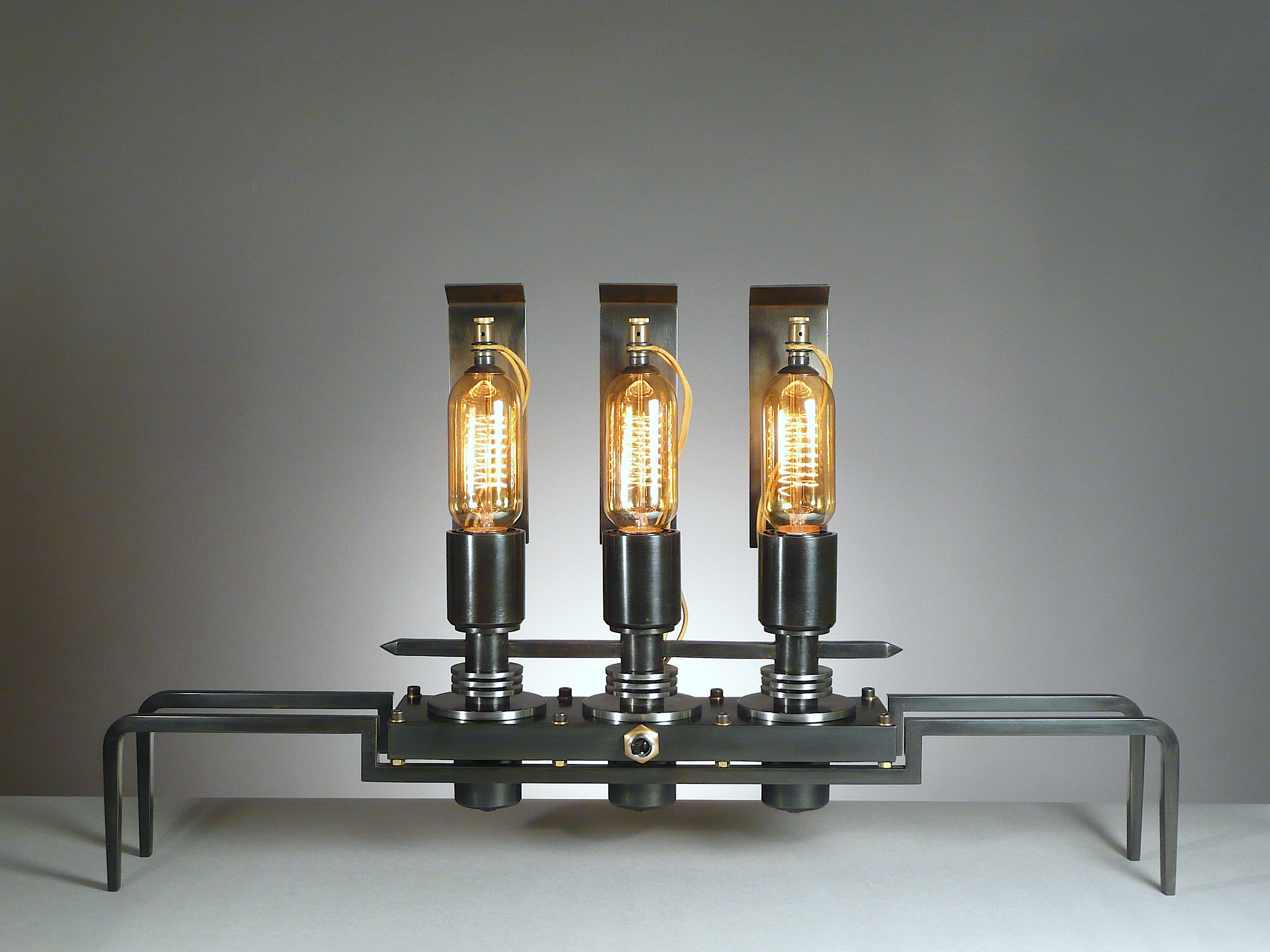
This is “Type 5”: one of the “Machine Lights” by Frank Buchwald.

MAD 5

The “Rhodium Birdfish” by Ulrich Teuffel is a beautifully hand-made modular electric guitar featuring two-piece aluminium body, interchangeable wooden tone bars, headless maple neck and sliding pickups.

MAD 6

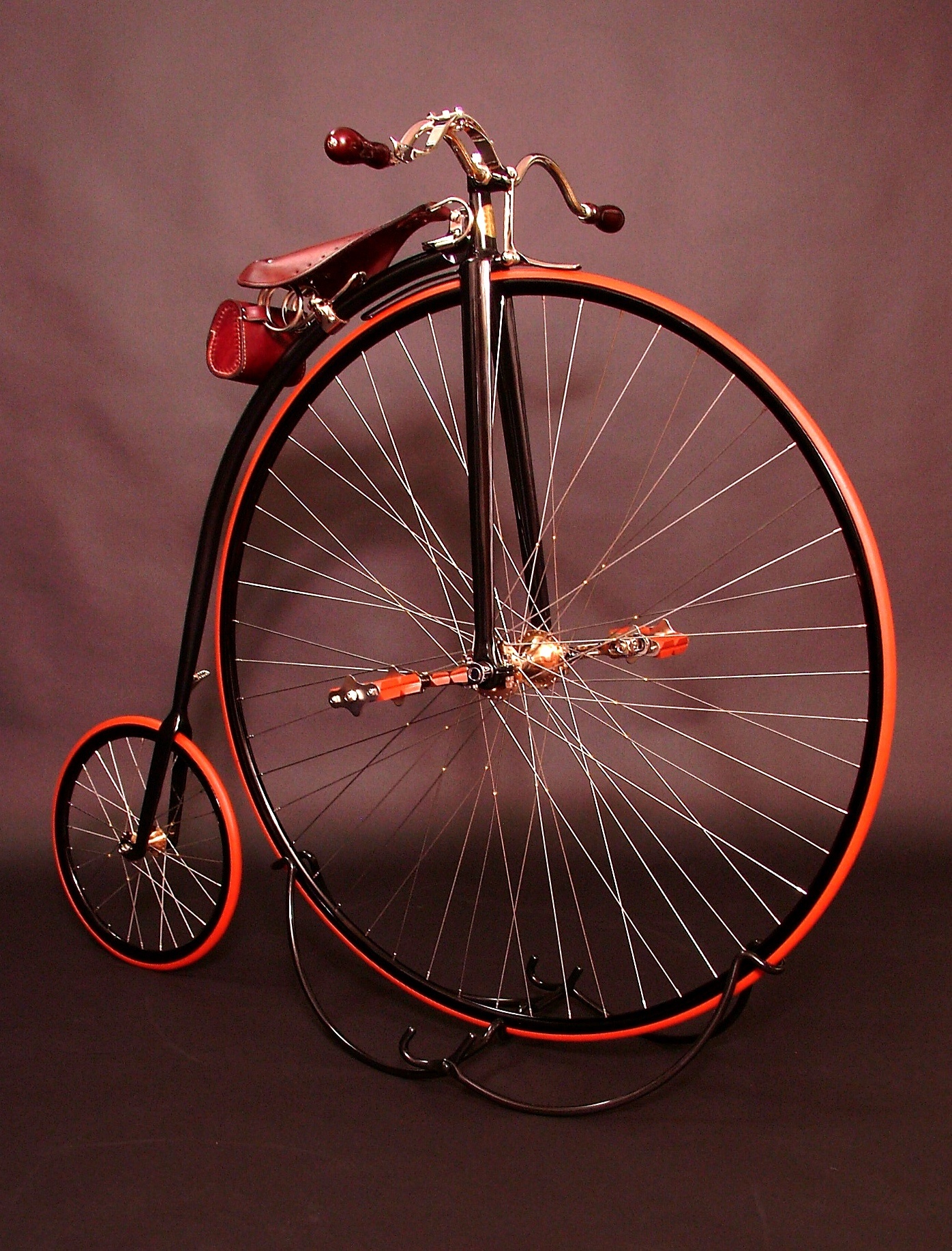
This penny-farthing bicycle, based on traditional designs of the 19th century, was hand-crafted by Zdenek Mesicek.

As I am leaving, Eléonor assures me she is willing to answer any questions I might have. Dare I ask, in jest, if I can take the penny-farthing for a quick tour around the narrow streets? Maybe not! Not so cool!

All photographs in this post are reproduced with thanks to MB&F M.A.D. Gallery.