About Robin

Occasional painter. Golfer. Fascinated by humanity. Passionate about beautiful stuff, the people who create it and its narrative.

The Dry Stone Walls of Cape Wrath, Scotland

Dry Stone Walls 1

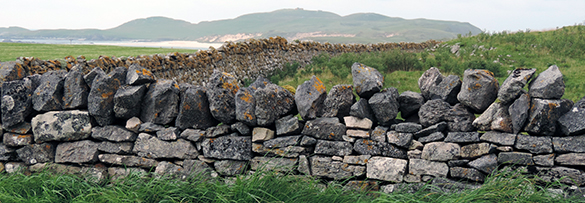
I am in Cape Wrath, Scotland. The weather is… well… Scottish! It is Sunday. The locals remind me that, as for golfers at St Andrew’s, Scottish tradition dictates that trout fishermen also take a break on the sabbath. (“You know, Sir, even the wee fishes need their rest!”) My passion for fly fishing is displaced for the day by my passion for discovering beautiful stuff. However, apart from Lotte Glob‘s isolated ceramic wonderworld, this is not the place to find many painters, sculptors, galleries or studios. It is the most northerly and bleak part of mainland Britain. Just hills with a scattering of sheep, lochs and sea. And then I realise that my view is full of beautiful stuff: dry stone walls.
Dry Stone Walls 2

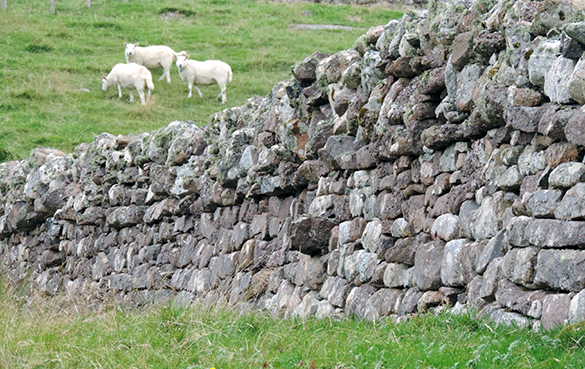
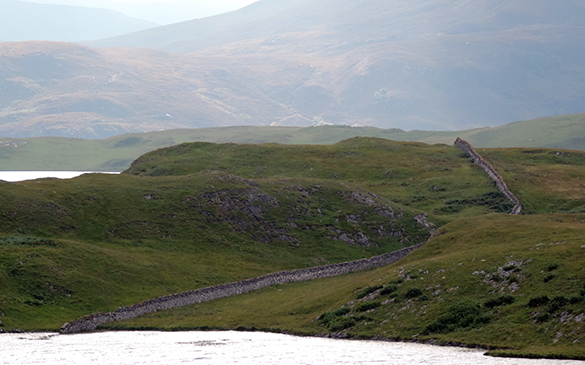
These walls are a major feature of the landscape of rural Scotland. They still serve as boundary markers and as fences to contain sheep. Some date back to the 1600s. Originally, land was cleared of stones for better grazing and crop growing. The stones were then piled up around the margins to contain the livestock. The history of Scottish dry stone walls is profoundly linked to the clan system, the volatile relationship between landlords and tenants, the infamous “highland clearances” and crofting. It is known that, centuries ago, many such walls were constructed by whole teams of professional wall builders. There is still a professional body dedicated to construction of dry stone walls.
Dry Stone Walls 3

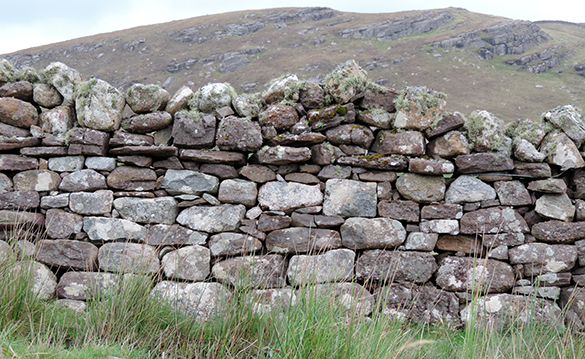
Dry stone walls contain no cement but they withstand the worst of Scottish weather (yes, the very worst!) However, their building involves much more than the simple piling of selected stones in a line. There lies within a recurring and more solid construction. The cross-section of such a wall reveals an “A” frame. The two lower limbs of the “A” are made of smother well-fitting and generally larger stones. Between them, unseen, is the “fill” of smaller stones. The cross piece and “apex” of the “A” are together made by the stones that sit atop the wall. Both the solid, weighty two-layer design and the enduring functionality result from a feat of engineering. As for stone houses, bridges and paved roads, I guess we will never know the name of the genius who first had the idea.
Dry Stone Walls 4

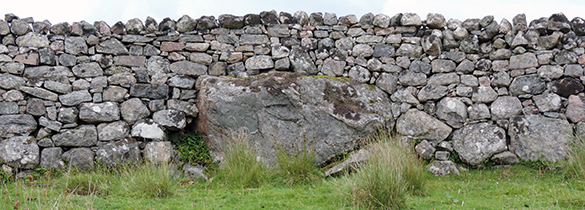
Cleverly and where necessary, the construction can simply incorporate a bigger unmovable rock that happens to be in the way. I am in awe of the skill of those who built these walls. I am mesmerised by the patterns and proportions created by the placement, shape, colour and texture of the stones. Other words come to mind. Resilience. Permanence. Balance. Complexity. This is beautiful stuff on a major scale.
Dry Stone Walls 5

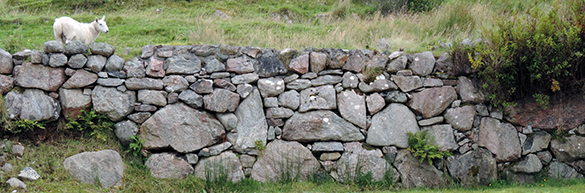
I find a little bonus to looking closely at these walls. Over hundreds of years each plays host to its own ecosystem of lichen, moss, grass, bracken, spiders, mice and beetles.
Dry Stone Walls 6

However, it is more than the the skill required to build these dry stone walls, their beauty and their place in nature that I dwell on. It is also the work invovled. I try to imagine being a builder. My hands are broad and calloused but dextrous nevertheless. My back is strong. I rely on an instinct guiding me to which stone is placed where and how it sits with its neighbours. Without this instinct the effort required would double as the stone in question must be moved, rotated, turned or even set aside for another. In physical terms, all I do is lift, place and move stones of up to 30kg. My working day is long. I build whatever the weather.

How accurate is my imagination? Is there anyone at hand who can tell me what it really takes to build a dry stone wall?
Dry Stone Walls 7

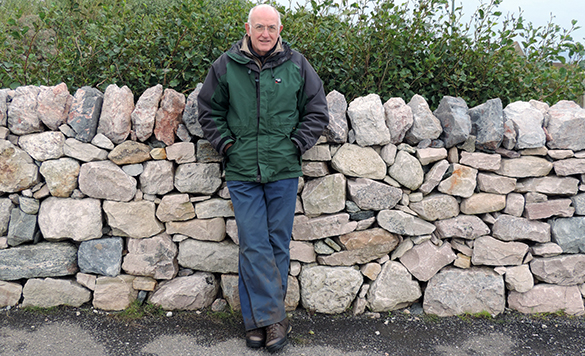
John Lennon was not famous as a builder of dry stone walls! However, there is a connection. Before the Beatles became famous, Lennon visited Durness near Cape Wrath  several times. His memories of the place and people inspired the song “In My Life” from the Rubber Soul album. In 2007, Durness dedicated a space to a John Lennon Memorial garden. And that tireless tinkerer in beautiful stuff, Roger Bunting, was a part of the team that made the dry stone wall that surrounds the garden. Roger shows me “his” part of the wall and is justly proud of it. I ask if its construction was hard work. “After two days, I was bloody knackered!” he replies.
Dry Stone Walls 8

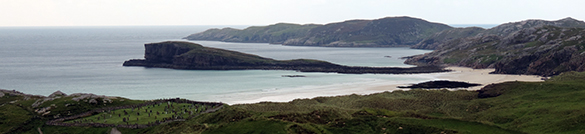
I drive south. I see a sign to Oldshoremore. As I drive through this crofting village heading for its famous beach, the only obvious man-made structure in view is the Oldshoremore cemetery. It occurs to me that its surrounding dry stone wall is unlikely to contain those ancient spirits that will come to haunt me if I catch a trout for my Sunday supper?
The Kindertransport statue revisited

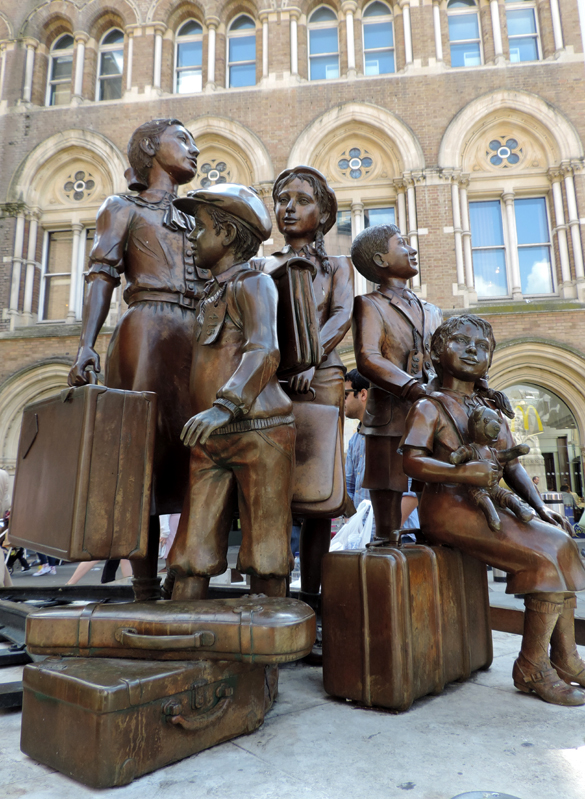
Every month, thousands of people read our post on the Kindertransport statue at Liverpool Street Station. I am in London for work. I decide to pay a visit to see how those five confused but proud children are doing.

Kindertransport 4

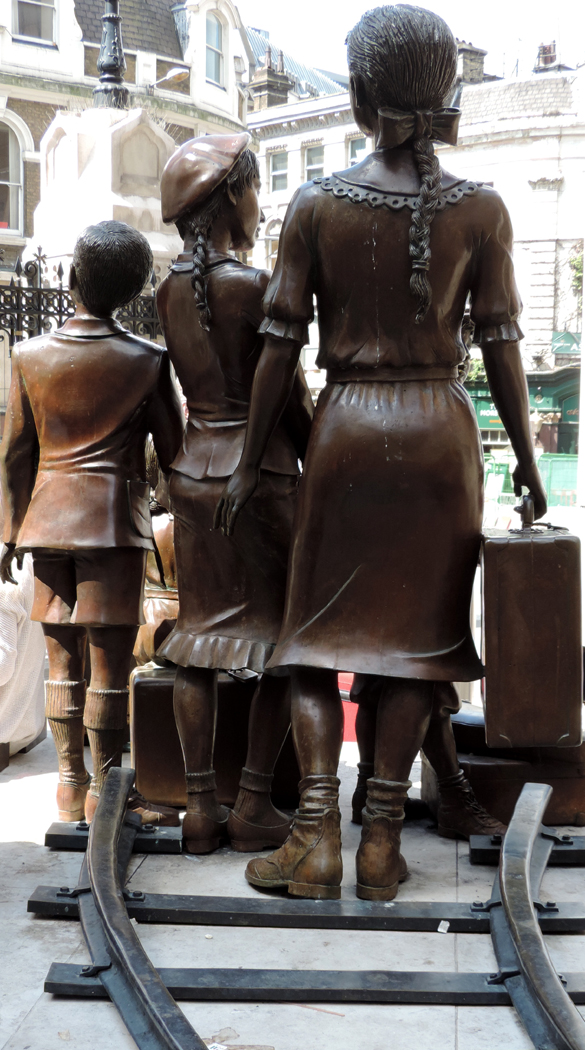
Previously unnoticed details catch my eye. Does the violin case mean there is a budding musical genius amonst them? I start to take more photographs. A lady in her eighties touches my arm. “They are beautiful aren’t they! I knew one of them. There were thousands of them: jewish children fleeing to England. It was years before that awful war.” I reply that indeed the bronze memorial is a very beautiful, poignant sculpture. “This is where I always meet my son” she continues. “We go for lunch!”

Kindertransport 5

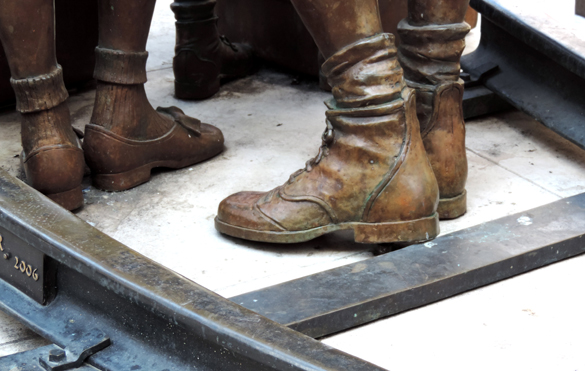
The two girls, poised nevertheless, have stout shoes for their journey.

The elderly lady’s son, a well healed businessman, arrives. I overhear his first words after greeting his mother. “It makes me furious that people sit on it and leave their coffee cups!” Indeed, I have to remove some garbage before taking these photos. The problem is that this fabulous bronze monument, marking the point where the children arrived by train in London, is at the entrance to one of the city’s busiest stations and right outside McDonalds.

Kindertransport 6

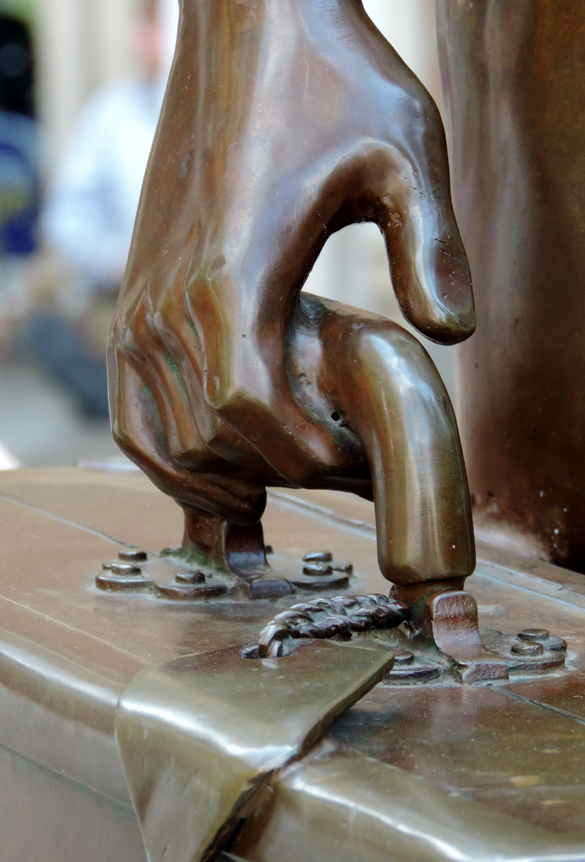
The way Meisler has sculpted this girl’s right hand is masterful. The grip on the handle of the suitcase is loose and delicate. There is little weight in the case. It seems to imply that the children left their homes with only a few most valued possessions.

Kindertransport 7

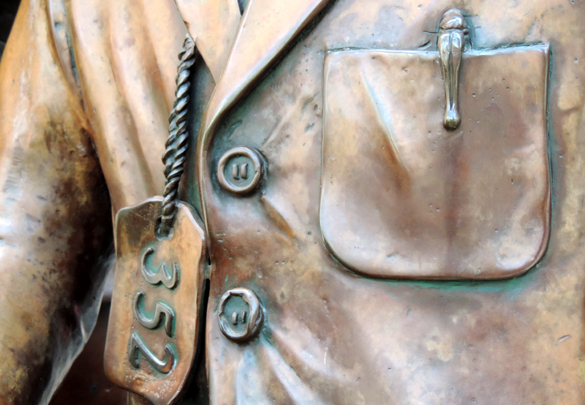
Documenting Meisler’s attention to detail absorbs me. The pen clipped into the breast pocket of the boy’s tightly buttoned blazer speaks to learning and maybe academic potential. But again, those labels with numbers are chilling reminders of what was to come.

Kindertransport 8

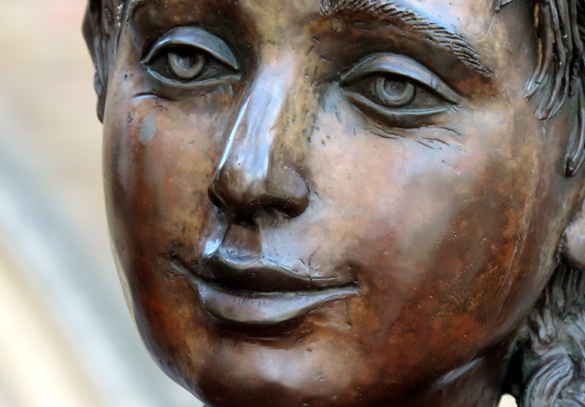
I look up at this girl’s face. The image stays for the day. I hear a voice behind me. An academic-looking American arrives with a group of ten or so youngsters. “Here it is!” he says with an expansive gesture. “One of my masters students did her thesis about this statue!” He recounts the story of the Kindertransport to his charges.

A young man besuited-and-silk-tied  stands looking at the figures. He tells me he always stops here for a minute or so when passing through the station. He is a soldier. “It’s just incredible, what happened! I mean, unbelievable! It breaks me up!” I agree with him and tell him I am writing about the statue for a blog about beautiful stuff. He takes my card, shakes my hand firmly and strides away.

Kindertransport 9

In the ten minutes that it takes to snap these photos, I come to realise that, when it comes to sculpture in public places, the Kinderstransport statue is something of a celebrity. People are drawn to its beauty and to its story.

But reality is context. My last exchange is with a dishevelled youth with needle tracks in his forearms. He has had his wallet knicked and he needs ten pounds to get a train to go and see his mum! My money stays in my pocket. I point out that maybe it’s not the best place to peddle his hard luck story. “Whatever!” he says and wanders off.

Celebrity Beautiful Stuff: 2

The conversation goes something like this: “I was fascinated by the TBS post on celebrity beautiful stuff, Robin, but what about ******* ” I then have to admit that, whilst obviously recognising the name,  I didn’t know that ******* painted. The story of celebrity paintings continues… with some surprises!

Celebrity 6

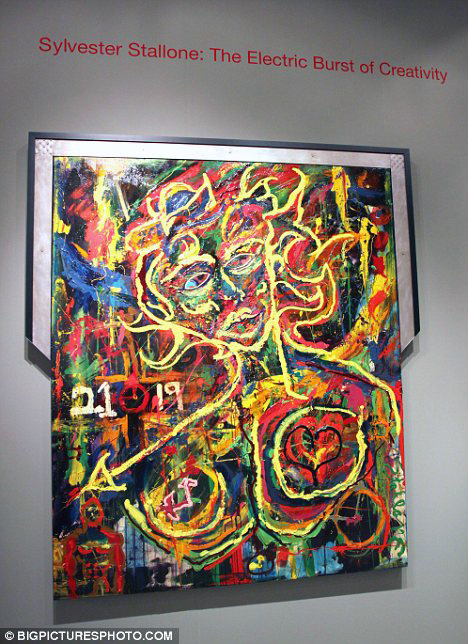
Self portrait by Sylvester Stallone. Year unknown. Photo copyright bigpicturesphoto.com.

I am drawn to Sylvester Stallone’s paintings. They are a kind of raw reflection of the Rambo – Rocky people he has brought to the big screen. Biceps bulge. Abs abound. Just so macho! I love his little inserted symbols that combine male circle-arrow and clock face. Is this about his fear of masculinity diminishing with the passage of time? Despite all the testosterone, there is nevertheless a universal-lovey-heart symbol under the pumping left pectoral muscle! A masterly touch is the partial frame accentuating those big square world-saving shoulders.

Celebrity 7

Photo copyright: sneakymag.com.

Proof that it really is a self-portrait!

Celebrity 8

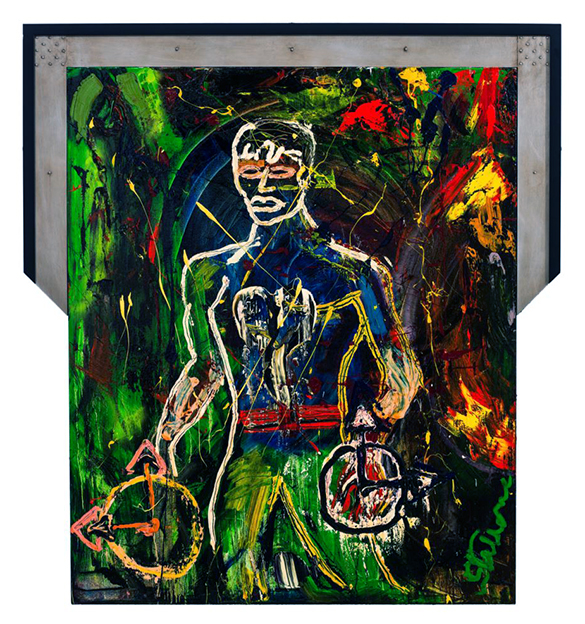
“Time Hands” by Sylvester Stallone. Year unknown. Photo copyright: Galerie Gmurzynska.

The critic who, on seeing Stallone’s paintings, said “Sly, keep the day job!” clearly didn’t realise that, first, Sly probably doesn’t need the day job, second, Sly has, in his own way, put his day job out there on canvas and, third, Sly sells his works for more than $45,000.

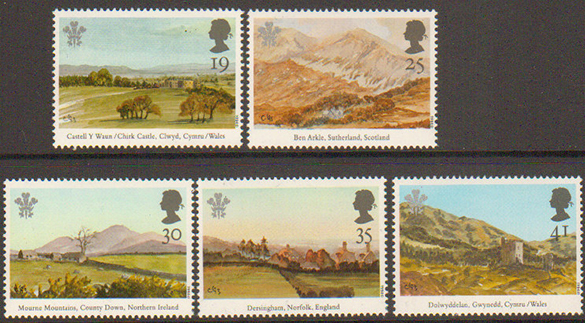
What does a moderately talented water-colourist have to do for his or her work to be the subject of a series of British postage stamps?

Celebrity 9

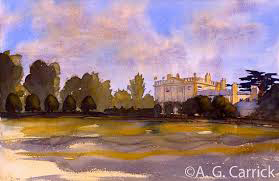
“Highgrove” by HRH Prince of Wales. Watercolour. Year unknown. Photocredit: AG Carrick.

Answer: be the next in line for the British throne!

Celebrity 10

Stamp series 1994 featuring water colours by HRH Prince of Wales.

Prince Charles has painted all his adult life. His work is accomplished, eye-comfortable and conservative. It’s not terribly imaginative. However, it’s good for stamps although I’d prefer an original Sly on my wall!

Whose rather dull paintings would you not want on your wall even though they sell at auction for $tens-of-thousands?

Celebrity 11

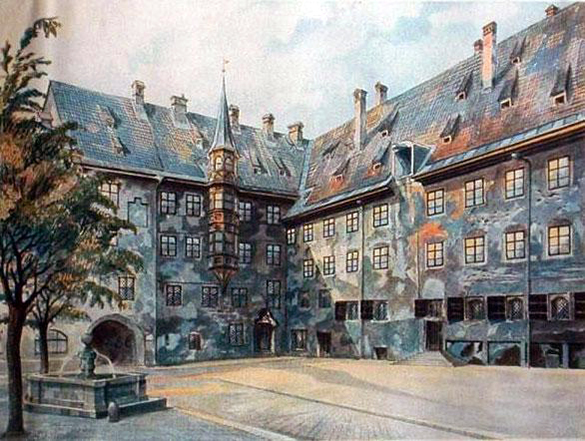
“The Courtyard of the Old Residency, Munich” by Adolf Hitler, 1914.

Yes, Adolf Hitler painted. He tried to get into art college as a youngster. He then thought about architecture but other career choices obviously presented themselves.

Celebrity 12

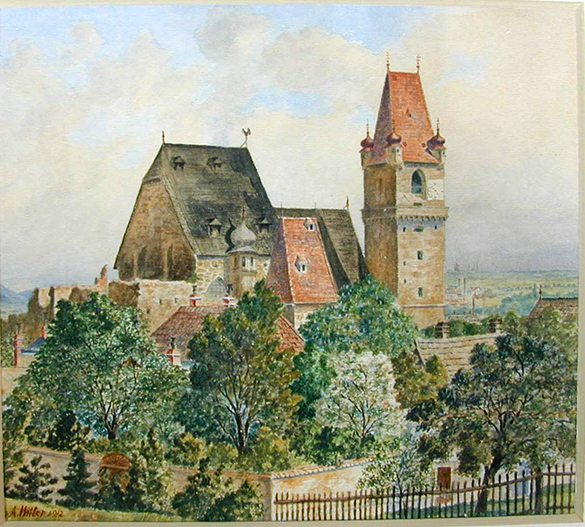
“Perchtoldsdorg Castle and Church” by Adolf Hitler, 1912.

In the previous post about celebrity beautiful stuff, I argued that celebrities’ paintings were worth more in financial terms precisely because they were done by celebrities. No other explanation needed. Would I want to own an original Hitler? No. Would I put a Hitler on my wall? No. But his paintings also command vast sums in the market place. Does this mean that notoreity does it for us just as well as celebrity?